Incoterms China–Europe: The Small Detail That Can Make Your Import Costs Skyrocket
6/1/20264 min read
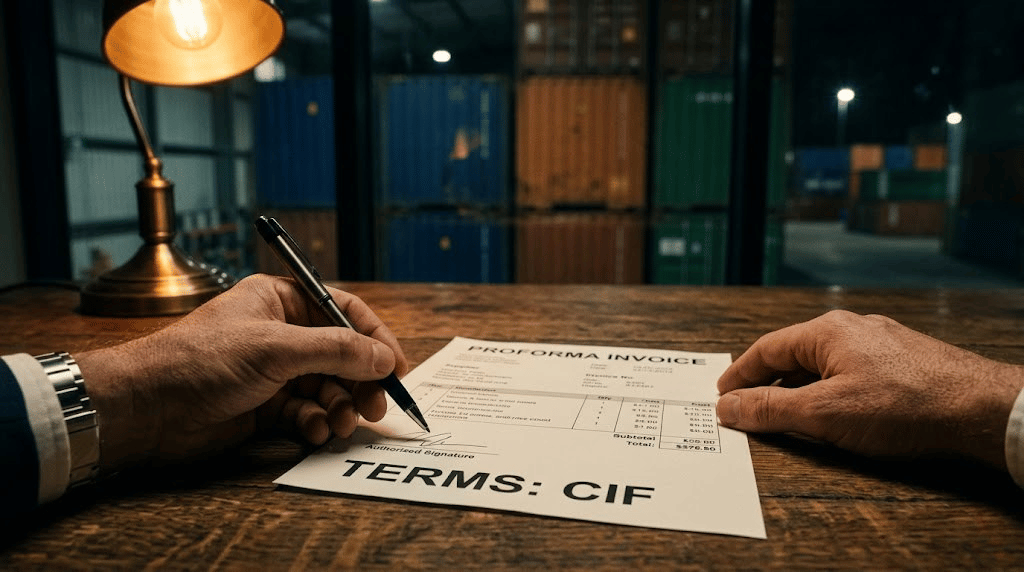
The quotation arrives by email. At the bottom of the page, it says: CIF Le Havre, all costs included.
The importer reads this and assumes that everything is straightforward and that the supplier will handle the entire logistics process. They sign and place the order.
Three months later, the freight forwarder sends an invoice including Terminal Handling Charges, final-delivery fees and, in some cases, additional insurance. These costs had not been anticipated because the CIF term ends at the port of arrival and does not cover delivery to the warehouse.
In reality, what has been delegated is not only the logistics process, but also visibility over the true costs.
This scenario occurs regularly in different forms. A single term in a quotation, such as EXW, FOB, CIF or DDP, can completely change the cost structure of an import operation.
Yet most businesses do not truly choose their Incoterm; they simply accept the one offered by the supplier.
What an Incoterm Really Determines
An Incoterm is not a price. It is a rule that defines three essential elements: who arranges and pays for each stage of transportation, when the risk transfers from the seller to the buyer, and who is responsible for export and import customs formalities.
There are eleven Incoterms in the 2026 version issued by the International Chamber of Commerce. In practice, an SME importing from China will mainly encounter EXW, FOB, CIF, DDP and, occasionally, FCA.
Each term provides a different level of control over the logistics chain and, therefore, a different degree of visibility over costs.
The logic is counterintuitive. The more the buyer delegates to the supplier through CIF or DDP, the less control they have over the real costs. The more control they take back through FOB or EXW, the greater their visibility—provided they know how to manage the associated logistics.
EXW — Ex Works: The Lowest Price on the Quotation, the Highest Cost in Reality
The EXW term means that the goods are made available at the factory. The supplier is only responsible for them while they remain at its premises. Everything else is the buyer’s responsibility, including inland transportation in China, export procedures, sea freight, insurance, customs clearance upon arrival and final delivery.
This term is often offered because it is simple for the supplier and displays a very low factory price. In reality, however, it quickly becomes complex and costly for an importer without a logistics partner in China. Inland transportation arranged remotely and without a local network can cost significantly more than expected.
In most cases, EXW is therefore risky for an SME making its first imports.
FOB — Free On Board: The Benchmark Standard for Importing SMEs
FOB is often regarded as the standard option for importers.
Under FOB, the supplier manages the goods until they are loaded on board the vessel at the export port. From that point onward, the buyer takes over.
This means that the importer is responsible for sea freight, insurance, port charges at destination, customs clearance and transportation to the warehouse.
The main advantage is transparency. The buyer selects their own freight forwarder, receives genuine market rates and retains a complete view of their logistics costs.
FCA — Free Carrier: A More Modern Alternative to FOB
FCA is similar to FOB but is better suited to container transportation and modern supply chains. The supplier delivers the goods to an agreed location, often a warehouse or terminal, after completing export customs clearance.
This term also enables better document management, particularly regarding the bill of lading, which can secure certain commercial operations and reduce the grey areas associated with FOB.
CIF — Cost, Insurance and Freight: The Appearance of Convenience
CIF appears convenient because the supplier arranges sea freight and insurance up to the port of arrival. The buyer is given the impression that everything is included.
However, this impression is misleading. The supplier chooses the carrier and the insurance provider, often adding a margin to the price. The importer does not know the true freight cost and cannot compare market offers.
In addition, the insurance included is generally minimal and may not adequately cover the actual value of the goods. In the event of a problem, the claims process is indirect and difficult to control.
DDP — Delivered Duty Paid: The All-Inclusive Price That Conceals the Costs
DDP is the most comprehensive term. The supplier handles the entire process, including customs duties and VAT. The buyer receives the goods without any apparent logistics management.
This model may seem ideal, but it creates a major problem: a complete loss of visibility over costs. The buyer does not know how much they are actually paying for transportation or how the taxes have been calculated. They choose neither the freight forwarder nor the customs declarations.
In some cases, DDP is offered excluding VAT, meaning that import VAT remains payable by the buyer even though they had not anticipated it. The impact on cash flow can be significant.
Which Incoterm for Which Type of Importer?
The choice depends on the importer’s level of logistics maturity.
FOB: the best balance for most SMEs.
FCA: ideal for regular importers seeking greater control over their documentation.
EXW: best reserved for companies that already have a solid logistics operation in China.
CIF: occasionally suitable for a test order or a first import.
DDP: should be used cautiously because of its lack of transparency.
The Real Problem: An Incoterm That Is Accepted Rather Than Chosen
The main problem is simple: the Incoterm is rarely chosen. It is imposed by default. It appears in the quotation, often at the bottom of the page, while the negotiation focuses solely on the unit price.
A supplier offering CIF or DDP is not necessarily only trying to simplify the buyer’s life. They may also be seeking to control part of the logistics chain where they can add a margin. Conversely, accepting EXW without a suitable logistics structure can lead to costs that are much higher than expected.
Asking to switch to FOB is not an aggressive demand. It is a normal step toward regaining control over the real costs.
Conclusion: The Incoterm Is a Strategic Decision
An Incoterm should always be defined before the order is placed. It is an integral part of the landed-cost calculation, alongside transportation, customs duties and the tariff classification code.
Without this decision, the true margin remains invisible until the goods arrive.
In practice, this is often where the gap appears between the purchase price and the actual cost of importing.
The Dragon Gate Sourcing Approach
At Dragon Gate Sourcing, we believe that a successful import operation should not be measured by the price shown on a quotation, but by the true landed cost of the goods delivered to your warehouse.
That is why we help our clients choose the right Incoterms, optimise their logistics and maintain control over all the hidden costs associated with importing from China.
Because a successful purchase is not only about negotiating the supplier’s price. It is about understanding and controlling every euro spent through to final delivery.
Contact
Dragon Gate Sourcing 龙门采购
Agent sourcing Chine–France pour PME
contact@dragongatesourcing.fr
Mentions légales | CGV
SIREN 103250072
© 2026 Dragon Gate Sourcing. Tous droits réservés.